
Form and function
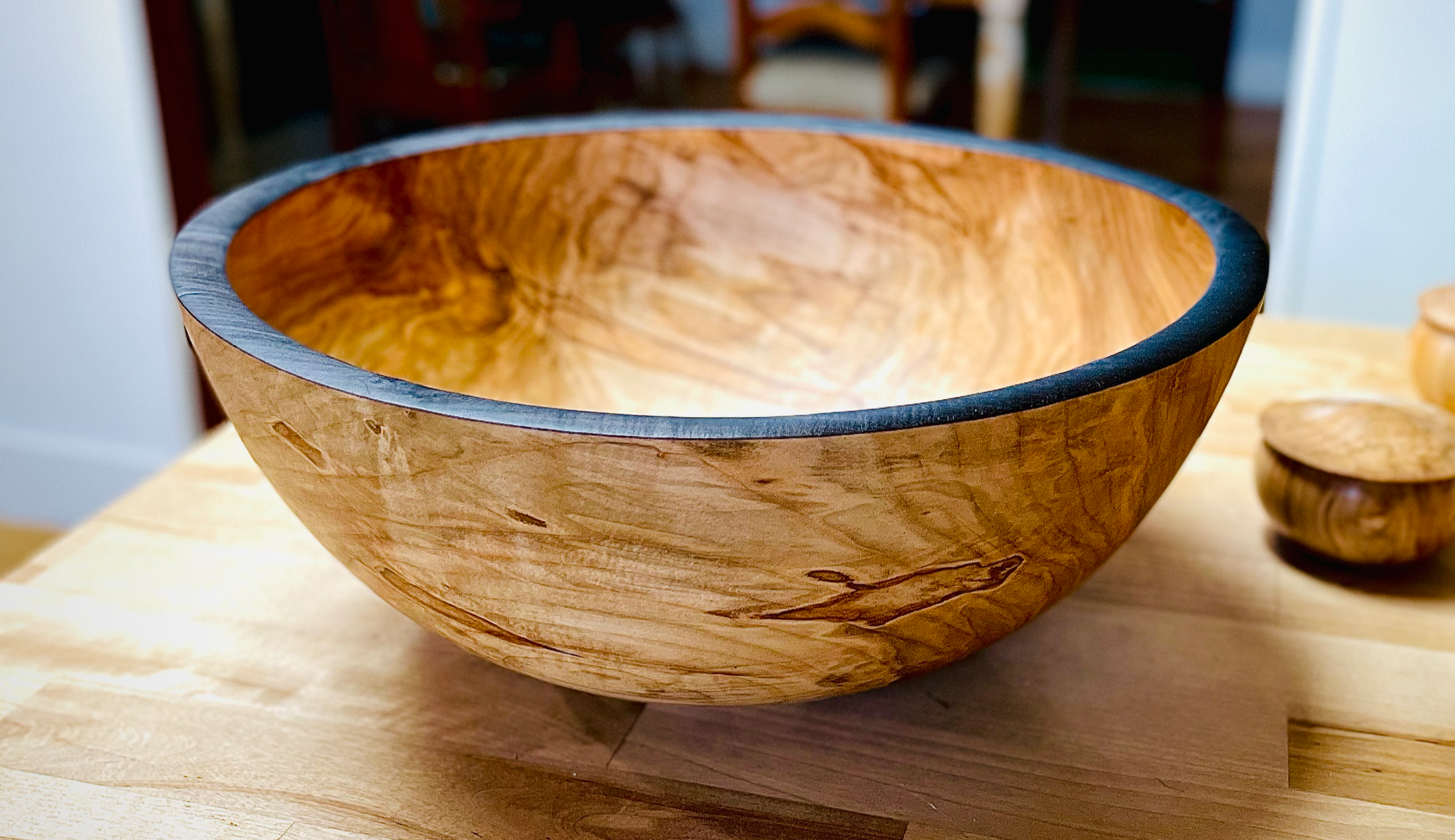
Form is something that has always been near and dear to my heart. In fact it’s the very thing that inspired me to want to create at the lathe. When I began to explore the possibilities of of what can be done on the lathe, one of my biggest inspirations was the late David Ellsworth, who held an MFA in pottery and decided that he wanted to create sculptural forms in wood. This was relatively new ground and he spent a lifetime developing tools and techniques to bring his visions to life. Seeing his work spoke to me and I felt instantly inspired. In those early days, I would spend hours searching the internet to see what people were creating all over the world. Although I had no idea what I was doing yet, I felt on some level that I had found my tribe. I loved to read the stories and backgrounds and inspirations of these talented woodworkers; always excited to see what had shaped the vision of what they were trying to say. I was learning a new language and finding my own voice. I was and still am excited to use woodworking as a way to say the things I need to say. So you get that machine, and you get some tools and you stand there watching the wood spin. You work through the sawdust, and the cuts and bruises ( and a few stitches) and the disappointments and the heartbreak of sending a piece flying into the wall after hours of work. But somewhere along the way, it happens. The tool is sharp, the wood is stable, your presentation is correct, and then things start to flow. Then it’s not about just trying to get through the process, but you being able to see shapes develop and come to life. For me, there are few things more satisfying. It’s about the most fun I can have with my clothes on. I was blessed to be able to allow my style and voice to emerge gently and organically.
I am sure I didn’t realize at first that the years I spent living in Japan and then in Washington state both had a strong influence on what would become the feel of my work. The traditional craft work of Japanese pottery as well as the overarching themes of the Asian aesthetic have always resonated with me. The fire was truly lit when I read The Unknown Craftsman: A Japanese Insight into Beauty by Soetsu Yanagi.
The Native American forms I experienced moved me in a different, but very powerful way. Ultimately I have always been more drawn to the utility pieces of the two cultures, and I feel there is a real power and grace in a personally crafted item that will be handled and used in everyday life. When I think about those two influences, I note the similarities between them. Both have real connection in the organic shapes of the natural world. Decoration and embellishments can detract from the work and if they do exist, are kept to a minimum so as not to pull attention from the form and balance of the piece. I heard a craftsman once say, “the most important thing that experience teaches us is what to leave out,” and I realized that when we are developing as artists and craftsmen, it can take a certain level of confidence and awareness to ignore those temptations and just make the most perfect form you can make and let it stand on its own. It can almost feel a bit naked and vulnerable at first, but then beautifully liberating. It’s kind of like the way we can be tempted to fill every silence in a conversation. It’s freeing to be able to create something simple and beautiful and just stand back and let it breathe. There is a lovely quote from the classical pianist Arthur Schnabel where he said, “the notes I handle no better than any other pianist, but the pauses between the notes, that is where the beauty resides.”
Perhaps all of this doesn’t matter to most people. Perhaps they don’t care much about the inspiration of my work or the significance of my influences. I can tell you that those times when someone picks up one of my pieces and holds in a certain way, I know without question that they can feel all the love and sacrifice and dignity that I bring to what I do. It matters to them that in a world of manufactured items, there is something else happening here: something special. It is a blessing and a privilege that I get to create and share these gifts with people that can appreciate them.
Peace and love
Nicola
The Harvest
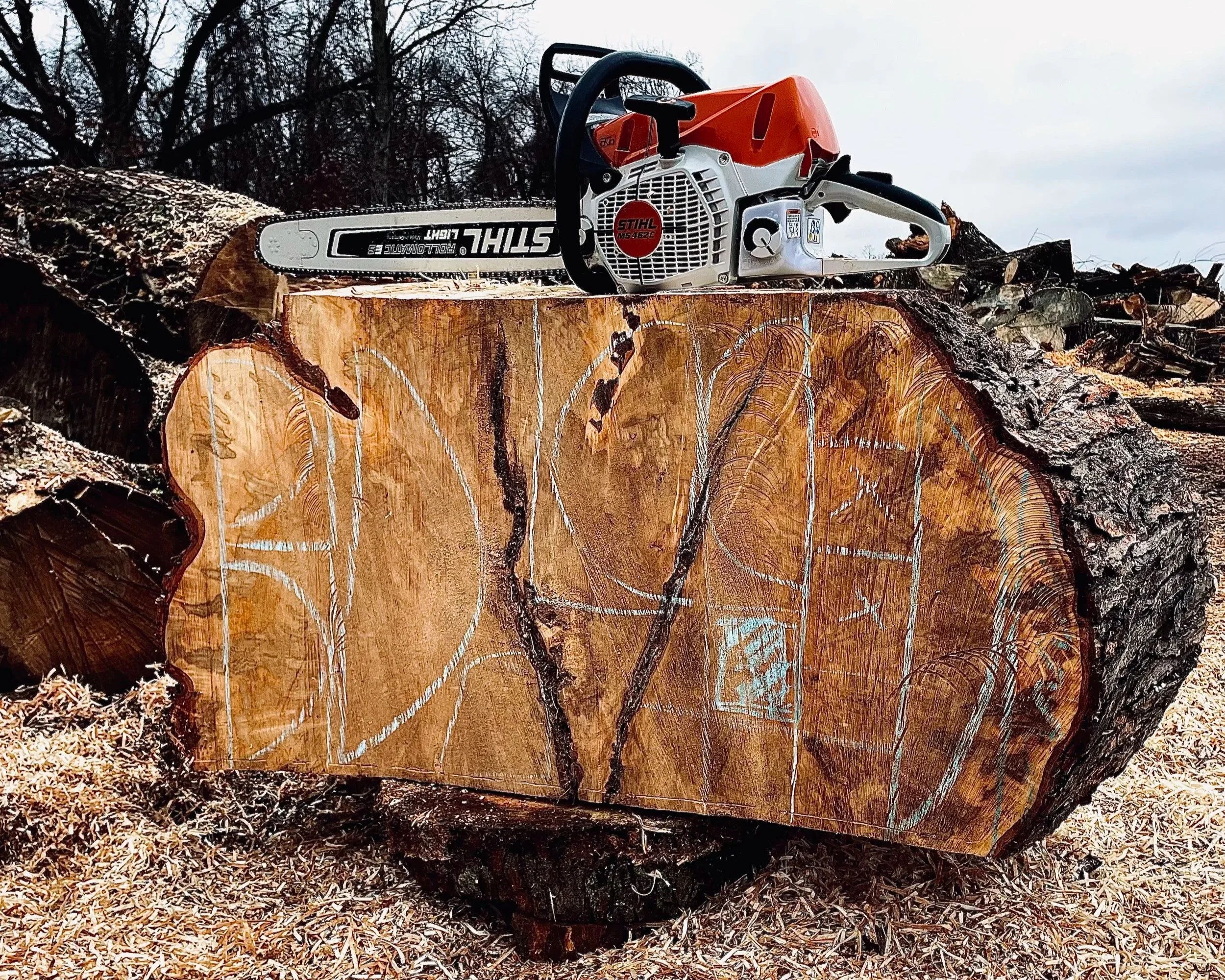
I mentioned in my last post that perhaps the most important part of my creative process and the thing that connects me to my work, is the act of harvesting my raw materials. This process usually takes place where the tree has been felled. This is usually on the property of the homeowner where the tree has been brought down due to age and/or decay. This process could take anywhere from a few weeks to a few months as I am careful not to harvest any wood that I cannot rough-turn within a few days. I choose to process all of my material while it is still green. The wood can contain up to 150% of its weight in water and the drying process must be done thoughtfully so as not to risk cracking. There are several factors involved in the decisions on how to break down the tree, not the least of which is how to get the most yield, without excessive waste and still show all the natural beauty of the woods grain, figure, and color. As with turning itself, if I approach this process with respect and thoughtfulness, it carries all the way to the final product. I have always understood that all objects carry an energy and I know that when my work is touched and handled that people can sense all the love and passion that went into making every single item. Once blanks are cut in the field, they are brought into the shop and rough-turned. I then store them to air dry naturally and once they are at equilibrium moisture ( the same moisture content as the air) they will be re-turned and finished. Most bowls are ready to finish in 4 to 6 months, and my spice grinders and canisters like to dry for about 12 months before they are re-turned. It’s true that there are a few different and faster ways of drying material. Most common is kiln drying green wood. Yes is would be much faster to work this way, but I have always preferred to finish with air-dried wood. There is something kind of personal in it for me as I feel like it just seems that kiln drying is too hard on the wood and it never seems to have the same quality and feel once it has been cooked in an oven for weeks. Having the privilege of teaching woodturning over the last 20 years, the harvesting process is one of my favorite things to talk about to other woodworkers. I get great satisfaction of demystifying the process and showing anyone how to connect better with there materials.
Peace and love
Nicola
The Rhythm of Love
I thought I would start off the first post of this blog by explaining why I borrowed the name of a song by the band YES. The most honest answer I can give is that is uses two of my favorite words. Rhythm and Love are at the very core of what I do as a craftsman. Our hearts beat, our chests rise and fall, and the earth spins. I have found that when things are flowing with a natural tempo, everything just seems to work better. I feel like the most challenging times of life have been when I allowed my impatience to push me to want a different experience than the one I am currently having. An argument with reality, you might say. So what does all this have to do with woodturning? Well I was lucky enough to realize that if I could let go of everything and move with the process of turning, instead of forcing my will on it, everything started to work. From then on, I was able to craft wood with passion and love. It’s been said that once you understand something through and through, you understand all things. If you can imagine getting to a point with anything where you can allow your focus to come together in one singular point, in my case, the tip of the tool. All of your passion, your energy, your frustration , and you love, you realize that this process has become your meditation. Just like the painter, the writer, the chef, and the sculptor, we find that this is the language we speak and the way that we communicate the things we need to share and the way that we give our gift to the world. Thank you for joining me on this journey as I share some thoughts on the process of my craft and maybe you will be able to see things in my work, or feel them when you hold a piece in your hand, that perhaps you didn’t notice before.
Peace and love,
Nicola